Treadmill Care at Home: Belt, Deck and Motor Upkeep for UK Owners
Most home treadmills fail within three years. The reason is almost never a faulty motor: it is skipped maintenance.
Treadmill belt and deck care at home is the one routine that separates a machine still running in 2034 from one heading to the tip in 2027. The work takes around 20 minutes a month, costs almost nothing, and needs only the allen key that came in the box.
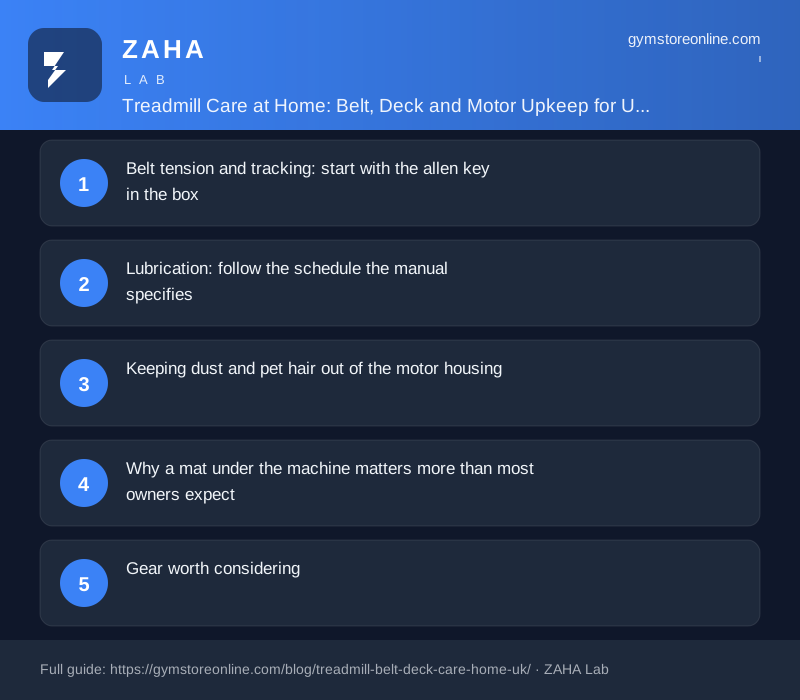
Belt tension and tracking: start with the allen key in the box
A belt that slips under load, or drifts to one side, is the most common complaint on home machines. Both faults are fixable without a technician.
Tension. Stand on the sides of the treadmill, switch it to its slowest speed (around 1 mph on most models), then step onto the belt. If it slows noticeably or hesitates, the tension is too low. Find the rear roller bolts at the back of the machine. Each quarter-turn clockwise on both sides, applied evenly, adds tension. One quarter-turn at a time, test again. Overtightening strains the motor and the deck, so stop as soon as slipping disappears.
Tracking. A belt that rides left or right will eventually fray at the edge. Run the machine at around 3 mph with nobody on it and watch. If the belt creeps right, turn the right rear bolt a quarter-turn clockwise. If it creeps left, do the same on the left side. Give the machine 30 seconds between adjustments to settle.
Your machine's manual will specify which direction to turn and by how much. Follow that over any generic advice.
Lubrication: follow the schedule the manual specifies
Most home treadmills use a silicone-based lubricant applied under the belt onto the deck surface. The interval varies: some manufacturers say every 40 hours of use, others say every three months regardless of use. Check the manual.
To lubricate, loosen the rear bolts slightly, lift the belt edge, and apply the recommended amount of silicone oil along the centre of the deck. Around 30 ml is typical, though this varies by model. Tighten the belt back to the correct tension, run the machine for two minutes at low speed to distribute the oil, then wipe away any excess from the belt surface.
Using WD-40 or a petroleum-based product will damage the belt. Use only a 100% silicone treadmill lubricant, or the specific product your manufacturer recommends.
Keeping dust and pet hair out of the motor housing
Treadmills in spare rooms, garages, and living spaces accumulate dust faster than gym machines do. Fine debris is pulled into the motor housing by the cooling fan and builds up around the motor and circuit board. On carpet especially, fibres and pet hair collect under the motor cover within weeks.
Every two to three months, unplug the machine completely, remove the motor cover (usually two or four screws), and use a soft brush or a vacuum on a low setting to clear the debris. Do not use compressed air directly on the circuit board. Replace the cover before plugging back in.
A treadmill placed directly on carpet is the worst environment for dust ingress. A mat under the machine reduces this significantly and protects the carpet pile too.
Why a mat under the machine matters more than most owners expect
Treadmill decks flex slightly under load. On a hard floor, that flex transfers into the floor surface; on carpet, the machine rocks and carpet fibres get drawn into the motor housing. A proper equipment mat absorbs vibration, stops the machine creeping across the floor, reduces noise (useful in flats), and cuts the amount of debris entering the motor housing.
A mat also protects laminate and wood flooring from the weight marks and rubber residue that treadmill feet leave over time. For a machine weighing 60 to 90 kg, those marks can become permanent after six months.
Gear worth considering
- 2-pack non-slip treadmill mat: a pair of interlocking mats that sit under most home treadmill footprints, suitable for hard floors and carpet alike.
- Treadmill and equipment floor mat: a single large mat designed to sit under the full machine, with good vibration absorption for flat and garage use.
- Universal rowing machine mat: works under any cardio machine and is worth considering if you run a rower or bike alongside the treadmill.
For a wider selection of machines, see the full Cardio Equipment range. The site also covers walking pads and under-desk treadmills and exercise bikes and indoor cycling for buyers comparing options.
Error codes, safe resets, and spotting a worn belt
Most home treadmills display error codes as E1, E2 or similar. A safety key removal and reattachment, followed by a power cycle (unplug for 60 seconds, replug), clears many transient errors. If a code returns immediately, look it up in the manual before running the machine again.
A belt nearing the end of its life shows specific signs: the underside feels rough or shows visible cracking along the edges, the surface shows uneven wear across the width, or the machine gives off a faint burning smell during use. Belts typically last five to ten years with correct maintenance. Replacement belts for popular UK brands are available online, and fitting is generally a two-person job on full-size models.
This guide covers general maintenance principles. Always refer to your manufacturer's manual for model-specific torque settings, lubricant types, and error code definitions.
Frequently asked questions
How often should I lubricate my treadmill belt?
Most manufacturers recommend lubricating every 40 hours of use or every three months, whichever comes first. The exact interval is in your machine's manual. Running a dry belt for too long accelerates wear on both the belt and the deck surface.
Can I put a treadmill on carpet without a mat?
You can, but it is not advisable for more than short-term use. Carpet fibres are drawn into the motor housing and the machine will rock slightly on soft pile, which can throw off belt tracking. A firm equipment mat sits between the two surfaces and addresses both problems.
What does an E1 error code mean on a home treadmill?
Error codes vary between brands and models, so E1 on one machine may mean something different on another. The most common cause is the safety key not being fully seated: remove it, reattach it firmly, then power cycle the machine by unplugging for 60 seconds. If the error returns, check your manual before using the machine again.