Training in a Shared House: Making a Home Gym Work With Flatmates
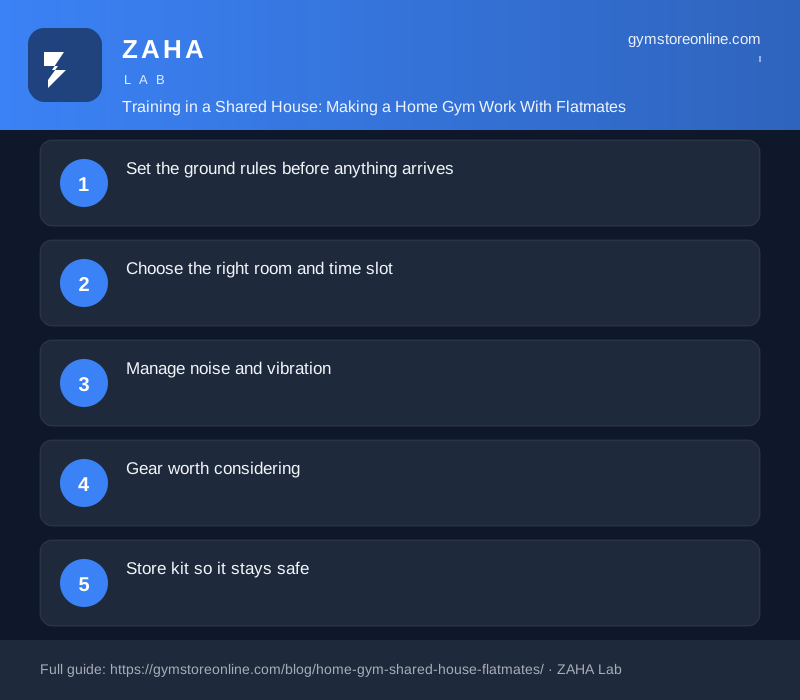
A standard UK single bedroom is about 8 square metres: enough for a full resistance session, and enough to start a flatmate dispute if you have not agreed a rota first. Training in a shared house with a home gym is completely workable. It needs a short conversation, some matting, and kit that packs away in two minutes.
Set the ground rules before anything arrives
A short conversation at the start saves weeks of quiet resentment. Before any kit is delivered, agree which room can be used, which hours are off-limits, and who tidies up afterwards. Write it down. Shift workers may need silence at 2 pm; light sleepers often need it before 8 am. A photo of the agreed layout on the kitchen noticeboard is far easier to enforce than a verbal arrangement made three months ago.
If the room doubles as a lounge, time-block your sessions. A 45-minute workout three mornings a week rarely conflicts with a flatmate's schedule once it appears on a shared calendar.
Choose the right room and time slot
Ground-floor rooms avoid vibration complaints from downstairs neighbours. If the room you have in mind sits above a living area, any dropped weight will be felt below. That matters more than most people realise until it happens. Standard UK internal door widths run to 762 mm or 838 mm, so a full-size barbell at 220 cm cannot pass through most interior doors lengthways. Measure before ordering.
A spare bedroom or a garage is the clearest option. If neither is free, the living room before 9 am or after 8 pm tends to suit more flatmates. Clear a 2 m x 1.5 m rectangle and you have enough floor space for a bodyweight session, bands, and a suspension trainer without touching anyone else's furniture.
Manage noise and vibration
Dropped weights and plyometric training transmit vibration through concrete and timber floors more than most people expect. A 10 mm rubber-backed exercise mat reduces impact noise noticeably. Layering a thin yoga mat on top adds a few extra millimetres of absorption. Even with two mats, overhead pressing a loaded barbell on a first floor will register in the room below. Switch to resistance-only movements during the hours that room is occupied.
The home gym noise and neighbours guide covers mat stacking, door seals, and what tenants can and cannot change in a rented property.
Gear worth considering
The best kit for a shared house packs flat or clips onto a door frame. Avoid freestanding racks unless you have a dedicated room with the ceiling height and explicit flatmate agreement.
- Extra-thick mat: a 10 mm exercise mat cushions floor work and light impact training, and rolls away in seconds when you are done.
- Resistance bands: a resistance bands set covers pressing and pulling work, stores in a small bag, and makes no noise on any floor type.
- Suspension trainer: an all-in-one suspension trainer anchors over a closed door, takes under two minutes to set up or remove, and handles upper body and single-leg work with no permanent footprint.
Browse the full Home Gym Equipment range for compact and foldable options.
Store kit so it stays safe
Plates left against a skirting board are a trip hazard. A single 5 kg dumbbell on a stair step is enough to send someone down the rest of them in the dark. Give every piece of kit a fixed home: a dedicated shelf or a wall-mounted bracket keeps weight off the floor and away from visiting children.
The home gym storage guide covers vertical bar holders, bracket types, and fitting a compact kit collection into a standard under-stairs cupboard.
Split the cost of shared equipment fairly
If two or more flatmates want to share a bench or a set of dumbbells, agree the terms before purchase rather than after. A clear rule: whoever orders the item owns it and takes it when they leave; the second person pays a share based on how often they use it. Equal use means an equal cost split. Put the purchase price and agreed share in a short message on a group chat, along with who keeps the item when someone moves out. That timestamps everything clearly without any need for formal paperwork.
Frequently asked questions
Can I use a power rack in a rented flat?
A standard power rack weighs between 50 kg and 120 kg and needs at least 2.4 m of ceiling clearance. Whether your floor can safely take the load depends on the building type and what your tenancy agreement permits. Check with your landlord before installing anything bolted to walls or floors.
What is the quietest type of home training for a shared property?
Resistance bands and bodyweight work produce the least vibration and noise of any training method. A suspension trainer anchored over a door adds upper body pulling exercises with no floor impact at all. If you want something more cardio-focused, a rowing machine on a thick mat generates considerably less noise than a treadmill.
How do we agree on who owns shared gym equipment when someone moves out?
The simplest approach is for the person who paid for the item to keep it when they leave. If costs were split, record the purchase price and each person's share in a message at the time of purchase. That avoids disputes when one flatmate moves out earlier than planned.