Setting up a home gym in a garage: how to handle damp, cold and limited space
15 September 2026 · GymStore Online
Garages are the cheapest square footage most UK homes own — and the fastest way to rust a barbell, crack a rubber mat and kill your motivation by November. The short answer on setting up a home gym in a garage: control moisture first, insulate the door second, then lay out kit that tolerates temperature swings.
A garage is often the only realistic spot for a home gym, but it is also the least forgiving room in the house. Damp air, freezing floors and awkward dimensions can make training unpleasant and shorten the life of your kit. This guide covers how to assess your garage, control moisture and temperature, and lay out equipment so you can train consistently through a British winter.
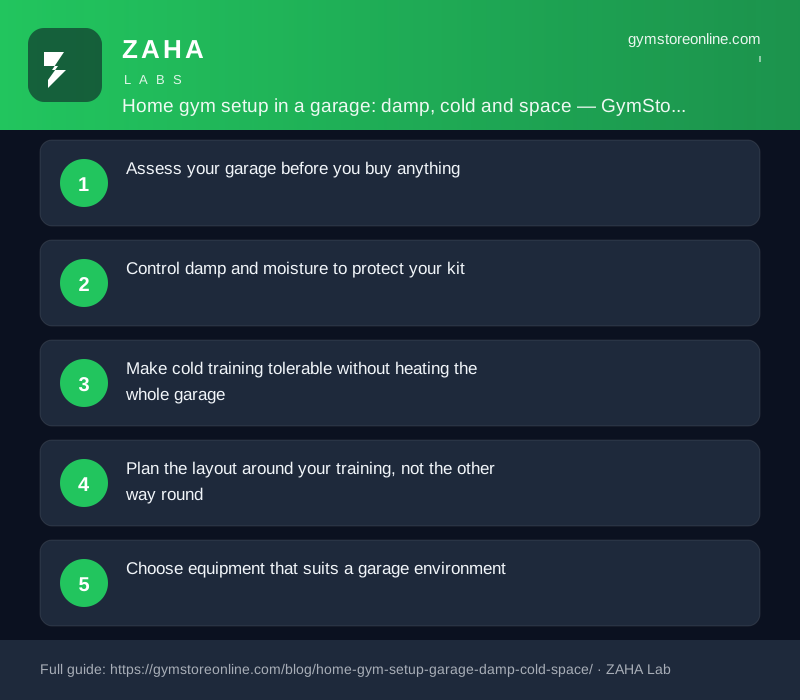
Assess your garage before you buy anything
Before ordering a power rack or a set of dumbbells, spend an hour understanding what you are working with. Check whether the garage is attached or detached, whether it shares a wall with the house, and whether it has any existing insulation. Look at the floor: bare concrete will wick cold and moisture upward, while a painted or sealed floor is easier to keep clean. Note the ceiling height, the width between walls, and the position of any up-and-over door, because these dimensions dictate what equipment will actually fit. A standard single garage in the UK is often around 2.4 to 3 metres wide and 5 to 6 metres long, but sizes vary widely, so measure rather than assume.
Damp is the first thing to check. Look for dark patches on walls, rust on any metal shelving, musty smells, or condensation on tools. If the garage has no damp-proof course or the walls are single-skin brick, moisture will be a constant issue. A cheap hygrometer, available on Amazon UK for under 10 pounds, will tell you the relative humidity. Levels above 60 per cent for long periods are a warning sign. Cold is easier to judge: if the space is unheated, it will track outdoor temperatures closely, which in winter can mean single figures inside. Space is the third constraint. Draw a rough plan on paper, marking doors, windows, boiler units and any obstructions, then sketch where you would stand to squat, bench and deadlift.
- Measure width, length and ceiling height before buying any rack or cage
- Use a cheap hygrometer to check relative humidity over a week
- Note power sockets, door swings and any fixed obstructions
Control damp and moisture to protect your kit
Damp is the biggest threat to a garage gym. It rusts barbells, degrades rubber mats, encourages mould on benches and makes the air feel raw. Start by removing the source if you can. Check gutters, downpipes and external drainage for leaks. Ensure the garage floor slopes slightly towards the door so water does not pool. If the roof leaks, fix that before spending money on equipment. For mild damp, a simple dehumidifier can make a noticeable difference. Look for a compressor model with a tank you can empty, or a desiccant model if the garage gets very cold, because compressor dehumidifiers lose efficiency below about 15 degrees Celsius. Running one for a few hours a day during wet months can keep humidity nearer 50 per cent, which is kinder to steel and rubber.
Ventilation matters as much as extraction. Garages with no airflow trap moisture from wet cars, drying washing or even your own sweat after a session. If you have a window or air brick, keep it clear. A small extractor fan wired to a humidistat will run automatically when humidity rises. Avoid sealing the garage completely, because trapped damp is worse than cold air. If the walls are bare brick, consider a breathable masonry paint rather than a plastic-based sealant, which can trap moisture behind the film. For floors, a rubber mat or interlocking tile with a closed-cell base will stop moisture wicking into your equipment, but do not lay it directly on a wet floor. Fix the damp first, then cover.
- Fix leaks and drainage before buying a dehumidifier
- Keep humidity nearer 50 per cent where possible
- Choose rubber-coated plates and wipe metal down after use
Make cold training tolerable without heating the whole garage
You do not need to turn a garage into a living room, but you do need to make it safe and bearable. Cold muscles are more prone to strains, and numb hands make lifting unpleasant. The cheapest effective measure is to dress for it: thermal base layers, gloves for the bar, and a hat for rest periods. Warm up longer than you would indoors, spending five to ten minutes on easy cardio or dynamic mobility before touching the bar. A small fan heater aimed at your rest area can take the edge off without heating the whole space. Convection heaters warm the air slowly; infrared heaters warm objects and people more directly, which can feel better in a draughty garage. Never use a portable gas heater indoors because of carbon monoxide risk.
If you plan to train regularly through winter, insulation is a worthwhile investment. Insulating the garage door is often the quickest win, using a foil-backed bubble insulation or rigid foam board cut to fit the panels. This reduces draughts and keeps some warmth in. For walls, studding and insulating is a bigger job, but it also gives you a surface to mount racks and storage. A ceiling that is already plasterboarded can be insulated from above if there is a loft space. If you cannot insulate, focus on reducing draughts around the door and any gaps, using brush seals or rubber strips. A cheap door threshold seal stops cold air pooling at floor level.
- Warm up longer and dress in layers rather than heating the whole garage
- Insulate the garage door first for the best draught reduction
- Never use a portable gas heater in an enclosed space
Plan the layout around your training, not the other way round
A garage gym works best when the layout follows your training. Decide what you actually do most weeks. If you squat, bench and deadlift, you need a rack, a bar, plates and a bench, plus enough clear floor to load and unload. If you do mostly dumbbell work and bodyweight training, you can get away with less. Sketch the footprint of each item. A typical power rack is around 1.2 to 1.5 metres wide and 1.2 to 1.5 metres deep, but you also need space to walk around it and to spot yourself safely. Leave at least 60 centimetres of clearance on the sides and front where possible. If the ceiling is low, check the rack height and whether you can press overhead inside it.
Think about zones. A lifting zone with rack and platform, a storage zone for plates and dumbbells, and a conditioning zone for a bike, rower or skipping rope. Keeping storage off the floor frees space and protects plates from damp. Wall-mounted plate trees, barbell holders and dumbbell racks are widely available on Amazon UK and cost from around 20 to 60 pounds. If the garage also stores bikes, tools or a lawnmower, use vertical space with shelving and hooks. A cheap tarpaulin or dust sheet over equipment you rarely use will keep dust and moisture off. Avoid storing paint, solvents or anything with strong fumes near your training area.
- Sketch equipment footprints and leave clearance around the rack
- Use wall-mounted storage to keep plates off the damp floor
- Choose rubber tiles or rolls and check the floor is level
Choose equipment that suits a garage environment
Not all home gym equipment is equally happy in a garage. Bare steel bars and plates rust quickly in damp air, so rubber-coated or bumper plates are usually a better bet, even if they cost more. A bar with a hard chrome or stainless steel finish will resist corrosion better than a bare steel power bar. For racks, look for a powder-coated finish, which is more durable than paint. Avoid equipment with exposed mild steel fixings where possible, or replace them with stainless bolts. If you buy second-hand, inspect for rust, especially inside the sleeves of barbells and on the threads of collars. A little surface rust on a cast-iron plate is not a disaster, but deep pitting on a bar is a reason to walk away.
Dumbbells are a common garage purchase, but adjustable dumbbells with plastic collars can become brittle in cold. Cast-iron or rubber-coated adjustable sets are more durable. If space is tight, a set of adjustable dumbbells plus a bench takes up far less room than a full dumbbell rack. Resistance bands and suspension trainers store in a small bag and tolerate cold well, though latex can perish over time if exposed to UV light, so keep them out of direct sun. Kettlebells are compact and almost indestructible, but check the handle finish, because cheap powder coat can chip. For cardio, a Concept2 rower or an air bike is popular in garages because they are relatively robust, but check the length and weight before buying, and store them upright if you can.
- Favour rubber-coated plates and chrome or stainless bars
- Adjustable dumbbells and kettlebells suit small, cold spaces
- Store chalk, belts and bands in sealed containers or bags
Buy for the environment: sealed rubber flooring, wall-mounted storage so plates never sit on a damp floor, and bars that resist corrosion. Browse the Home Gym Equipment category for racks and platforms, the Fitness Accessories category for mats, hygrometers and organisers, and the Cardio Machines category for indoor conditioning. If the floor is the weak point, start with our guide to home gym flooring, and if you still need a rack, read squat racks and power cages before you measure the ceiling.
Get the damp and the cold right, plan the footprint around how you actually train, and a garage becomes the most practical gym in the house — no membership, no queue for the rack, and no excuse to skip a session when the weather turns.
Recommended Gear
Hand-picked kit for this guide:
- Folding Wall-Mounted Bar: a solid pick for this training style 🔥 Check Price — Folding Wall-Mounted Bar on Amazon UK
- Foam Roller: a solid pick for this training style 🔥 Check Price — Foam Roller on Amazon UK
If you are ready to start kitting out your garage, begin with the basics: a hygrometer, a rubber mat and a rack that fits your space. You can browse our picks for garage-friendly racks, bars and storage on GymStore Online, and always measure twice before you buy.
Frequently Asked Questions
Can you use a garage gym in winter?
Yes, with adjustments. Cold muscles strain more easily and numb hands make lifting unpleasant, so warm up five to ten minutes longer than indoors, dress in layers, insulate the garage door and keep a small heater aimed at your rest area. If the garage drops near freezing, move your heaviest sessions indoors for a few weeks.
How do I stop my gym equipment rusting in a garage?
Control moisture first: fix leaks and drainage, keep ventilation open, and aim for around 50 per cent relative humidity with a dehumidifier in wet months. Then choose rubber-coated or bumper plates and chrome or stainless steel bars, store plates on a rack rather than the floor, and wipe metal down after every session.
How much space do you need for a home gym in a garage?
A typical single UK garage is roughly 2.4 to 3 metres wide and 5 to 6 metres long, which is enough for a rack, bar, plates and bench if you leave around 60 centimetres of clearance at the sides and front. If you train mostly with adjustable dumbbells and a bench, you need considerably less.
Do you need a dehumidifier in a garage gym?
Not always. Fix leaks, clear gutters and improve airflow before buying one. If humidity stays above 60 per cent, a dehumidifier helps; choose a desiccant model for a very cold garage, because compressor units lose efficiency below about 15 degrees Celsius.
As an Amazon Associate, we earn from qualifying purchases.