Budget Home Gym UK: What to Buy First at £300, £500 and £1,000
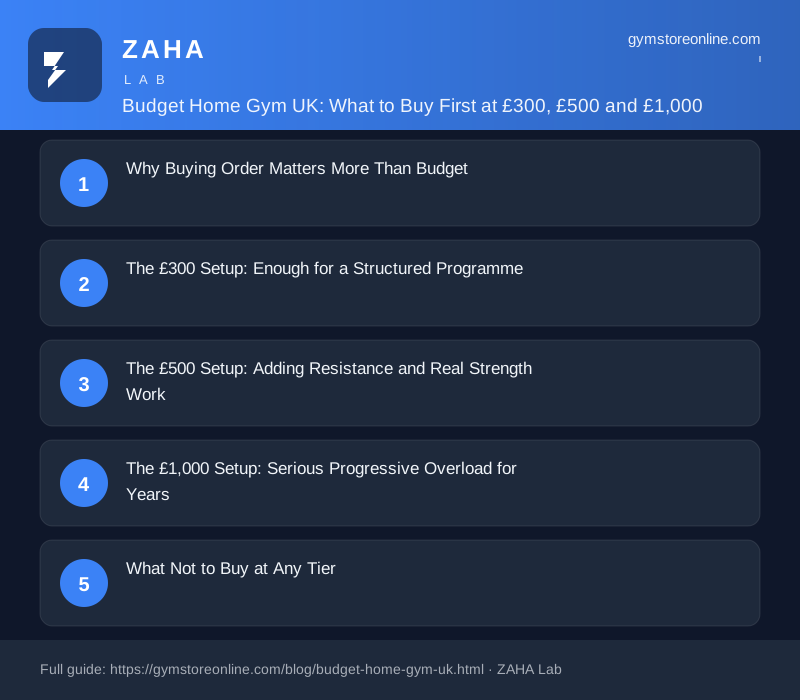
Most people overspend by £400 on a first home gym and abandon it within two months. A properly sequenced budget home gym gives you a complete strength and conditioning base for under £300, with a clear path to £500 and £1,000 as training becomes more consistent.
The order of purchases matters as much as the total. Buy the wrong things first and you end up with a squat rack, no plates, and nowhere safe to drop a bar.
Why Buying Order Matters More Than Budget
The temptation is to start with a bench press and a barbell because that is what commercial gyms have. The problem: barbells require plates, a rack, collars, and floor protection before they are usable. That is £400 spent before you have completed a single set.
Start instead with equipment that works immediately and independently. Adjustable dumbbells, a doorframe pull-up bar, and a resistance band set cover squats, hinges, presses, rows, and vertical pulls. A complete programme on day one, no additional components required.
The £300 Setup: Enough for a Structured Programme
At £300, you are buying versatility rather than volume. The core list:
- Adjustable dumbbell set (to at least 24kg per hand): covers the majority of hypertrophy work
- Doorframe pull-up bar: vertical pulling without wall fixings or drilling
- Resistance band set (5 bands, varied tensions): useful for pre-exhaustion, mobility work, and banded squats
- Foam roller (£15 to £25): recovery and warm-up
This setup handles compound pulling, pushing, and hinging. You can follow a structured programme like Greyskull LP, any push-pull-legs split, or a full-body three-day plan. The limitation at £300 is loading ceiling: once you are pulling 25kg dumbbell rows comfortably, you have outgrown this tier.
The £500 Setup: Adding Resistance and Real Strength Work
The jump from £300 to £500 buys two things: a flat utility bench and either a heavier dumbbell pair or a beginner barbell-and-plates package.
A flat bench turns floor presses into proper horizontal chest presses and enables seated overhead pressing. Quality entry-level options cost £60 to £100. With the remaining £100, the choice splits: buy a heavier fixed dumbbell pair (32kg or 36kg) if upper-body compound work is the priority, or buy a 20kg barbell with 60kg of standard plates to start squatting and deadlifting under proper load.
The barbell route at £500 is tight. Add collars (£10 to £15) and a mat and you will be lifting from the floor only. That is still viable for Romanian deadlifts, bent-over rows, floor presses, and overhead pressing. No rack, but a usable barbell programme.
The £1,000 Setup: Serious Progressive Overload for Years
At £1,000 you can build a rack-based strength setup that handles progressive overload for two to three years before it needs upgrading. Core components:
- Power rack or squat stand (budget options from £180): safe barbell squatting and pressing without a training partner
- 20kg Olympic barbell (£80 to £120 for a solid entry-level bar): better sleeve rotation and knurling than standard bars
- 100 to 140kg of Olympic plates: sufficient loading for most lifters across squats, deadlifts, and presses for 12 to 18 months
- Adjustable bench: flat, incline, and decline functionality
Spend the remaining £200 to £300 on programme-specific additions. A cable attachment for the rack adds lat pulldowns and tricep work. A pair of 16kg and 24kg kettlebells adds ballistic training. A jump rope and a 20kg sandbag provide conditioning without a machine footprint.
This setup matches what most commercial gyms offer for strength training. The missing elements are cable stacks, leg press machines, and equipment variety, none of which are required for consistent progress.
What Not to Buy at Any Tier
Cardio machines are poor value per square foot. A £300 budget treadmill delivers around 30% of a commercial machine's build quality and lifespan, while a £10 jump rope covers most of the cardiovascular benefit for interval training. If structured cardio is a priority, an assault bike is a better long-term purchase than a treadmill, but it costs £300 to £400 on its own.
Avoid multi-gyms at the entry level. They cost £200 to £400, limit loading to fixed cable stacks, and use more floor space than a free-weight setup. The loading range on most multi-gyms tops out at 80kg to 100kg total, which beginners outgrow within a year.
Gear Worth Considering
Three products getting consistent positive feedback from UK home gym buyers:
[ADJUSTABLE DUMBBELL SET - PRODUCT NAME] The selectorized dial design replaces a full dumbbell rack in a small footprint. Look for a set reaching at least 24kg per hand with a stable cradle that does not flex under load.
[FLAT UTILITY BENCH - PRODUCT NAME] A bench rated to 300kg static load is sufficient for most lifters. Folding versions save floor space when training is done and work well in spare rooms or garages.
[POWER RACK OR SQUAT STAND - PRODUCT NAME] At the £1,000 tier, a half-rack with J-cups and integrated safeties is the single most consequential purchase. It makes barbell squats and bench presses safe without a training partner present.
Can I build muscle at home without a barbell?
Yes. Research on resistance training shows that load, volume, and proximity to failure drive hypertrophy more than the implement. Dumbbells taken close to failure produce equivalent muscle growth to barbell work at matched volumes. The practical limit is loading ceiling: most beginners take 6 to 12 months to outgrow what a 24kg adjustable dumbbell offers on lower-body compound work.
How much floor space does a home gym need?
A 3m by 3m area (9 square metres) covers the £300 tier comfortably. Adding a squat rack and barbell requires at least 3m by 4m to move safely. Ceiling height also matters for overhead pressing: 2.3m minimum, 2.5m ideal.
Is second-hand equipment worth buying?
Yes, particularly for plates and barbells. Facebook Marketplace and Gumtree regularly list Olympic plates at £1 to £1.50 per kg against a new price of £2 to £3 per kg. Barbells in good condition sell for £40 to £60. Check that the sleeves rotate freely and that any bench base has no lateral wobble before collecting.
Do I need rubber flooring?
At the £300 tier, a yoga mat is sufficient for dumbbell and bodyweight work. For barbell training, interlocking rubber tiles protect both the floor and the plates. Budget £50 to £80 for a 2m by 2m tiled area and lay it before the first heavy session.